Wet shaving can deliver a close, comfortable shave with less plastic waste than cartridge systems, but beginner gear should be forgiving. The goal is a repeatable technique, not a cabinet full of traditional shaving kit.
Affiliate disclosure: As an Amazon Associate I earn from qualifying purchases. This does not affect the price you pay.
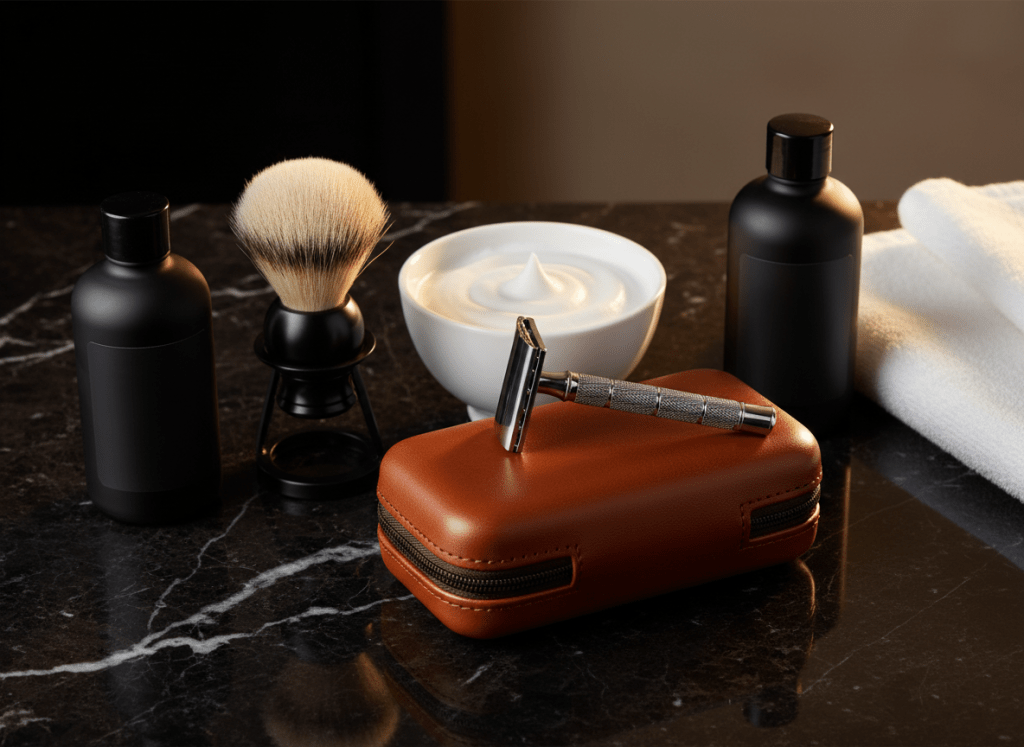
What should a starter kit contain?
- A mild double-edge safety razor: A closed-comb head is generally easier for beginners.
- A small blade selection: A modest sample is more useful than 100 of an untested blade.
- A synthetic brush: Soft, quick-drying and easy to maintain.
- A slick cream or soap: Easy lather and lubrication matter more than elaborate scent.
- A soothing balm: A low-fragrance option is sensible for sensitive skin.
- Safe storage: Helpful but not essential; do not let decorative extras inflate the price.
What makes a razor beginner-friendly?
A mild or medium razor gives more margin for imperfect angle and pressure. Weight helps the razor move without being pushed, while a textured handle improves control with wet hands.
Five wet-shaving starter kits to consider
These five options provide useful starting points for a traditional wet-shaving setup. Compare the razor type, included accessories and replacement-blade format before buying.
How to choose the right setup
Best all-in-one kit
Choose this for convenience or as a gift. Check that the razor and brush are useful everyday items and that replacement blades use the common double-edge format.
Best-value setup
Buying the razor, synthetic brush and cream separately often delivers better quality than a very cheap boxed kit. An ordinary shaving cream can work perfectly while you learn.
Best for sensitive skin
Prioritise a mild razor, lightly fragranced or unscented cream and a gentle balm. Fewer passes and almost no pressure usually help more than adding another product.
Best upgrade route
Upgrade only after you know what limits the shave: perhaps a different blade, better soap or a slightly more efficient razor—not automatically the most expensive kit.
A straightforward first shave
- Shave after a warm shower or hold warm water on the beard area for a minute.
- Add water gradually until the lather is glossy and slick rather than dry and foamy.
- Hold the razor at roughly a 30-degree angle and use short strokes with virtually no pressure.
- Make the first pass with the grain and rinse the razor frequently.
- Relather and, if comfortable, make a second pass across the grain. Avoid against the grain while learning.
- Rinse with cool water, pat dry and apply a small amount of balm.
Mistakes that cause beginner problems
- Pressing a safety razor like a cartridge razor.
- Chasing perfect smoothness with too many passes.
- Using lather that is too dry.
- Changing razor, blade and soap together, making irritation difficult to diagnose.
- Assuming the sharpest blade must suit every face.
Frequently asked questions
Is wet shaving cheaper?
Blade costs can be low—provided razors and soaps do not become a collecting hobby. “Saving money” has a habit of arriving in a mahogany presentation box.
How often should I change a blade?
Replace it when it tugs, feels rough or needs extra passes; for many people that is after several shaves.
Do I need a shaving bowl?
No. You can build lather on the face or use a suitable ordinary bowl. Spend first on the razor, brush and reliable cream or soap.
The no-nonsense verdict
A mild safety razor, synthetic brush, easy-lathering cream and small blade sample are enough. Learn your beard’s growth pattern and use less pressure than feels natural.


Leave a Reply