Cutting your hair at home can save a surprising amount of money, but weak clippers can snag, stall and leave visible steps. A good home set should be powerful enough for your hair, comfortable to control and supplied with the guards you will actually use.
Affiliate disclosure: As an Amazon Associate I earn from qualifying purchases. This does not affect the price you pay.
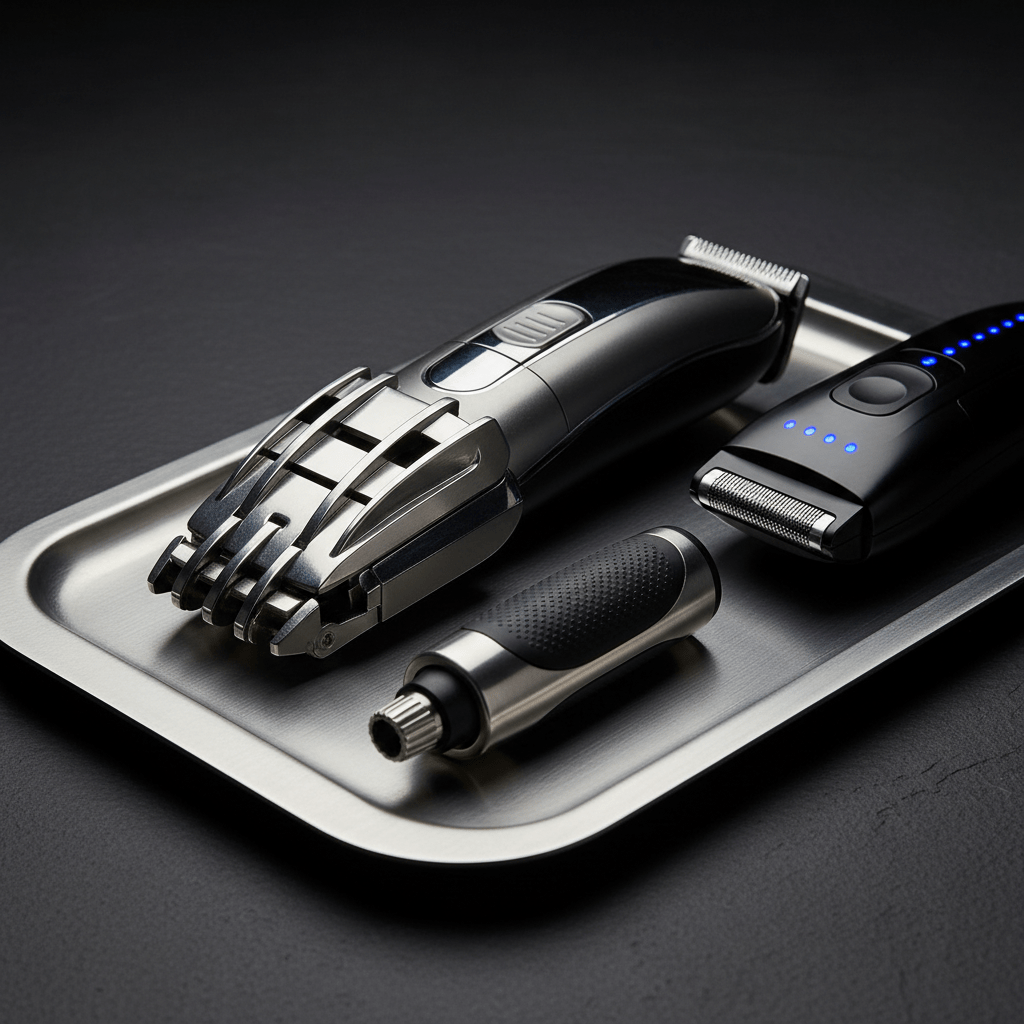
Clippers or trimmers: which do you need?
Clippers have a wide blade and stronger motor for removing bulk from head hair. Trimmers use a narrower blade for edges, necklines and beard detail. Buy capable clippers first; a trimmer is a useful extra, not a substitute.
What matters when choosing hair clippers
- Motor power: Thick or coarse hair needs steady torque. A motor that slows under load is more likely to pull hair.
- Corded or cordless: Corded models give uninterrupted power. Cordless clippers are easier for self-cuts; look for at least 60 minutes of usable runtime.
- Guard range: Secure, rigid guards matter more than an enormous accessory count.
- Taper lever: Small blade adjustments help soften the line between two guard lengths.
- Blade care: Easily accessible blades are simpler to brush clean and oil. Check that replacements are available.
- Weight and grip: A heavy professional machine may be tiring when reaching around your own head.
Five hair clippers to consider
These five options suit different budgets and home-cutting needs. Check the current specification, included guards and customer reviews on Amazon before choosing.
Which type suits you?
Best all-round choice
For most households, choose a solid cordless clipper with a taper lever, a useful set of numbered guards and the option to run while plugged in.
Best budget choice
For occasional all-over cuts, a straightforward corded model is often better value than a cheap cordless set. You lose manoeuvrability but gain consistent power.
Best for thick or coarse hair
Prioritise motor strength, rigid guards and sharp replaceable blades. Dozens of accessories are irrelevant if the clipper stalls halfway through the first pass.
Best for self-cuts
Look for cordless operation, a grippy body, clear guard markings and manageable weight. A second mirror will prevent more disasters than any fancy attachment.
A simple first home haircut
- Start with clean, dry, detangled hair and fully charged clippers.
- Choose a longer guard than you think you need. Hair has yet to develop an Undo button.
- Cut against the direction of growth using slow, overlapping passes.
- Use a shorter guard on the sides and back, stopping where the head begins to curve.
- Blend the join with the taper lever or an intermediate guard using a gentle flicking motion.
- Check the result in good light, then brush clean and oil the blades.
Common mistakes to avoid
- Starting too short before learning how your hair grows.
- Pressing hard instead of letting the motor and blade work.
- Skipping blade oil, which increases heat and wear.
- Trying an ambitious skin fade on the first attempt.
- Buying by accessory count rather than motor, blades and guard quality.
Frequently asked questions
Can one clipper cut hair and trim a beard?
Yes, but it is usually less precise around the moustache and neckline. Clippers handle bulk; a dedicated trimmer is better for detail.
How often should blades be oiled?
Follow the manufacturer’s instructions. As a practical rule, use a small drop before or after each haircut and wipe away the excess.
Are cordless clippers powerful enough?
Good ones are. For dense hair, look for consistent reports of power under load rather than judging the machine by runtime alone.
The no-nonsense verdict
Most beginners need dependable cordless clippers, solid guards and a taper lever—not a suitcase full of plastic attachments. Start with simple cuts and maintain the blade.


Leave a Reply